When introducing children to the world of programming, diving straight into text-based languages like Python can be overwhelming. The strict rules of syntax—where a single missing colon or misplaced indentation can crash an entire program—often lead to frustration rather than learning.
This is where block-based coding comes in. Platforms like our SuperRobots Game provide a visual, intuitive way to understand computer science concepts without the hurdle of typing flawless syntax. But how exactly does snapping colorful blocks together translate to writing real Python code?
1. Mastering the Sequence of Execution
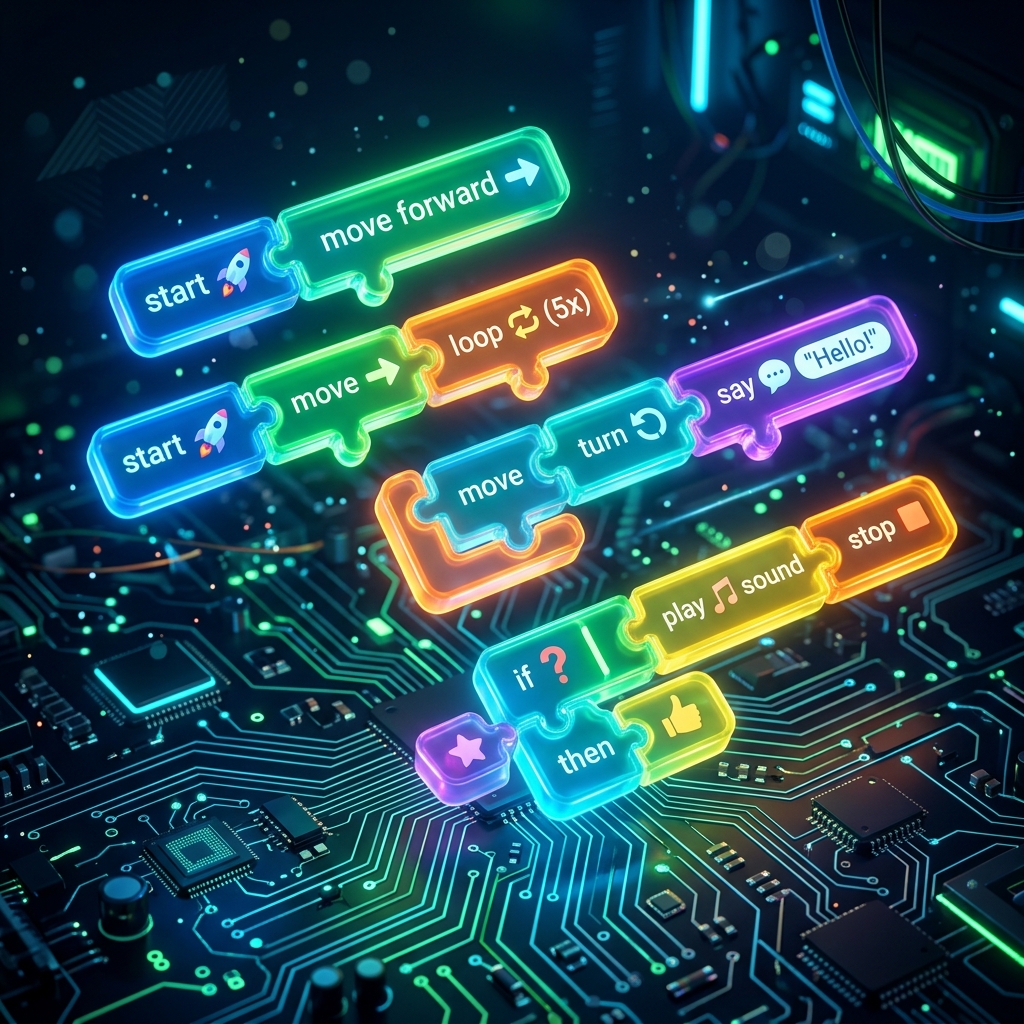
The most fundamental concept in programming is the "sequence." Computers execute commands exactly in the order they are given. In block coding, kids physically stack commands (like Move Forward, then Turn Right) from top to bottom. They visually see the sequence.
When they transition to Python, this concept translates perfectly to lines of code executing from top to bottom. The mental model of a "stack of commands" becomes a "script of statements."
2. Understanding Loops and Automation
Writing the same command five times is tedious. Block coding introduces Loops (like a Repeat 5 times block that wraps around other blocks). Kids learn that computers are incredibly good at repetitive tasks.
In Python, this translates directly to for and while loops. Because they already understand why a loop is used and what it does visually, learning the Python syntax (for i in range(5):) becomes a simple translation exercise rather than a struggle with a brand-new concept.
3. Conditional Logic (If/Then)
Decision making is the core of Artificial Intelligence. In our games, kids use blocks like If Path Ahead is Blocked to make their robot react dynamically to the environment.
When moving to Python in the Cyber Dungeon, they use if, elif, and else statements. The visual representation of a "branching path" in block coding makes the text-based conditional statements immediately understandable.
4. The Debugging Mindset
Perhaps the most valuable skill learned in block coding is resilience. When a robot crashes into a wall, the child must read through their blocks, find the logical error, fix it, and try again. This iterative process of testing and fixing is called debugging.
When they start writing Python, they will encounter syntax errors and logic bugs. Because they already have the "debugging mindset" developed through block coding, they are far more likely to persevere and solve the problem rather than giving up.
The Transition: Cyber Dungeon
At SuperRobots, we built the Cyber Dungeon specifically to bridge this gap. After mastering the visual logic in our block game, players enter the dungeon where they must write actual Python code (hero.moveRight()) to solve similar puzzles.
Because the underlying algorithmic concepts are already solid, players can focus entirely on learning the new Python syntax. It’s the perfect stepping stone on the journey to becoming a software engineer.
Enjoyed this tutorial?
Find more interactive coding challenges and play the Cyber Dungeon game at SuperRobots.org.