If you've decided your child should learn to code — great choice! But then comes the question that stumps most parents and teachers: should they start with Scratch or Python? Both are excellent tools, but they serve very different purposes. This guide will break it down so you can make the right call.
What Is Scratch?
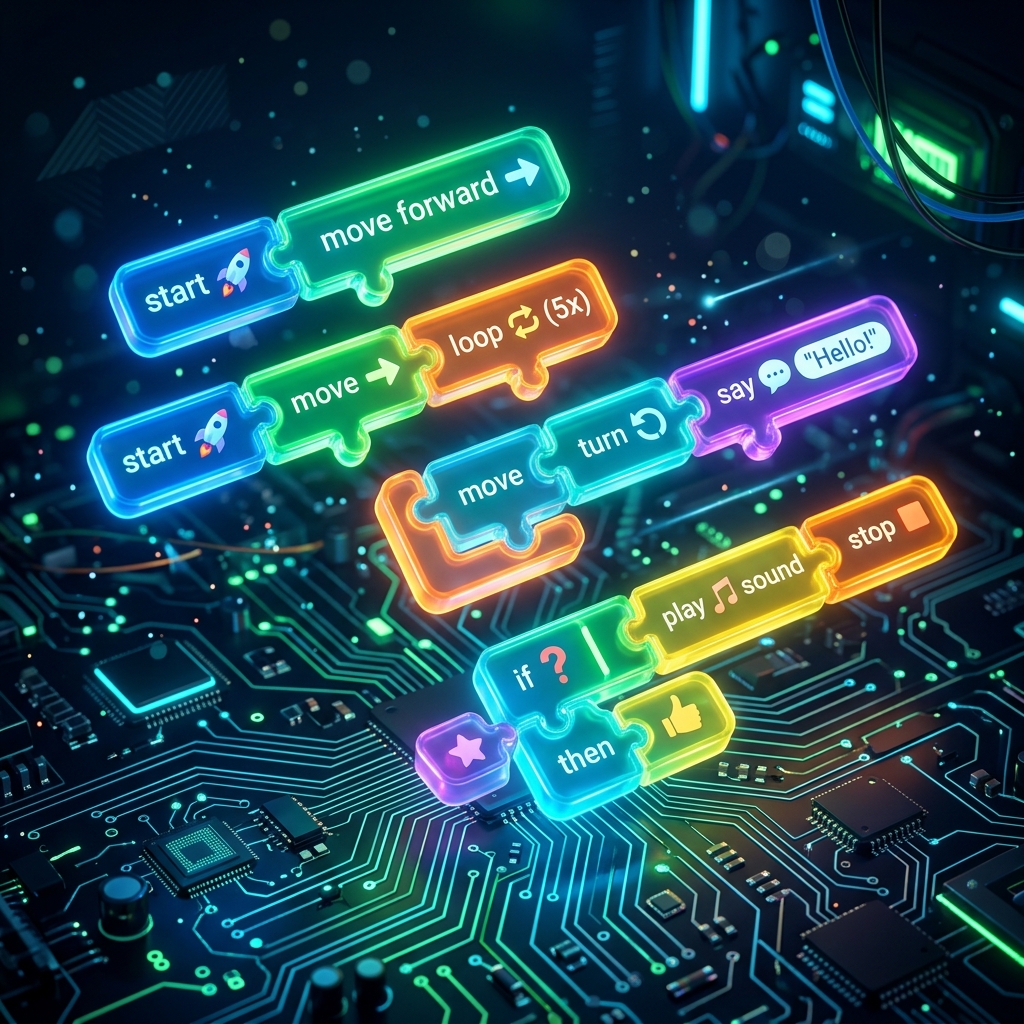
Scratch is a free, visual programming language developed by MIT. Instead of typing code, you build programs by snapping together colorful, puzzle-piece-shaped blocks. There's no syntax to memorize and no cryptic error messages. It was specifically designed to be accessible to children aged 8 and up.
Scratch is great for building games, animations, and interactive stories. Millions of kids use it worldwide, and projects can be shared on the Scratch community website, which provides a huge motivational boost.
What Is Python?
Python is a real, professional programming language used by engineers at Google, NASA, and Netflix. It's text-based — you type your instructions rather than dragging blocks. Python is widely considered the most beginner-friendly text-based language because its syntax reads almost like plain English.
Python is used for web development, data science, artificial intelligence, and robotics. Learning Python gives kids a genuine, career-relevant skill.
Head-to-Head Comparison
| Feature | Scratch | Python |
|---|---|---|
| Recommended Age | 8–12 years | 11+ years |
| Input Method | Drag & drop blocks | Typed text code |
| Learning Curve | Very gentle | Moderate |
| Real-World Use | Educational only | Professional & industry standard |
| Error Messages | Visual, forgiving | Text-based, descriptive |
| Best For | Games, animations, stories | Apps, AI, robotics, data |
The Case for Starting with Scratch
Scratch is purpose-built for teaching. When a beginner makes a mistake in Python, they get a wall of red error text that can feel overwhelming. In Scratch, you simply move a block and try again. The friction is minimized, so kids can focus entirely on learning concepts — sequences, loops, conditionals, and variables — rather than wrestling with syntax.
These concepts are identical to what you'll use in Python. You're building the mental model first, and swapping in the text syntax later is a much smaller leap than trying to learn both at once.
Choose Scratch first if...
Your child is 8–11 years old, is brand new to coding, or gets frustrated easily. Scratch builds confidence quickly and makes coding genuinely fun from day one.
The Case for Going Straight to Python
For older kids (12+) who are motivated and goal-oriented, jumping straight to Python can be more engaging. Teenagers often feel that "kids' tools" are beneath them, and working in a real professional language feels more meaningful. Python's syntax is genuinely readable: if health < 10: hero.retreat() is not hard to understand on first read.
Go straight to Python if...
Your child is 12 or older, is highly motivated, and has a specific goal like building a game or learning AI. The real-world applicability keeps them engaged.
The Best Approach: Use Both as a Stepping Stone
At SuperRobots, we believe the ideal path uses both. Our SuperRobots Block Game uses a Scratch-like visual system to teach sequences, loops, and conditionals. Once those concepts click, players graduate to the Cyber Dungeon, where they write real Python code to solve the same types of puzzles.
Kids who learn concepts visually first show higher retention and confidence when they make the jump to text-based code. They don't have to learn what a loop is at the same time as how to type for i in range(5):. The goal isn't the tool — it's the thinking skill underneath it.
Enjoyed this tutorial?
Find more interactive coding challenges and play the Cyber Dungeon game at SuperRobots.org.